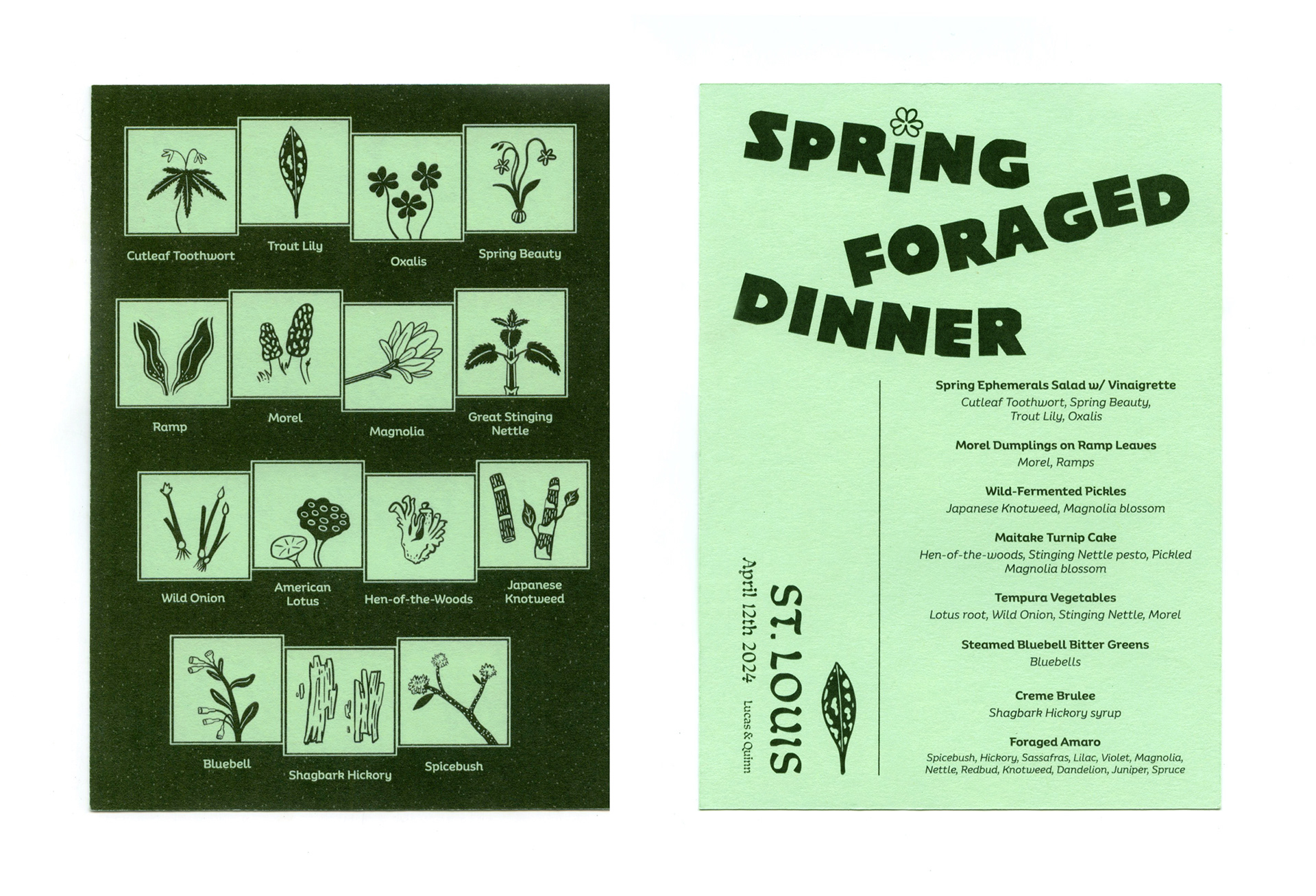
In collaboration with Lucas Drummond, I host a series of seasonal foraged dinners. We have three main intentions with this practice; to craft delicious food from overlooked, unexpected or often rejected edibles. To learn about and celebrate indigenous and diasporic cultural traditions around wild foods. And to use foraging as a starting point for sparking engagement with our local ecosystem, questioning the environmental costs of pollution and industrial agriculture, and imagining possible futures in the face of globalized food chains and contemporary environmental collapse.
Foraging in the US would not be possible without centuries of indigenous wisdom. Living in the unceded land of the Arapaho, Cheyenne, Ute and other tribes, we recognize that many indigenous communities face food insecurity as a result of laws that prevent them from maintaining their historic land practices. We believe foraging education offers a path to repair urban relationships with the land — a path that should lead to the rematriating of land to indigenous communities, repealing of anti-indigenous foraging laws, and a widespread shift towards indigenous practices of sustainable land management.